
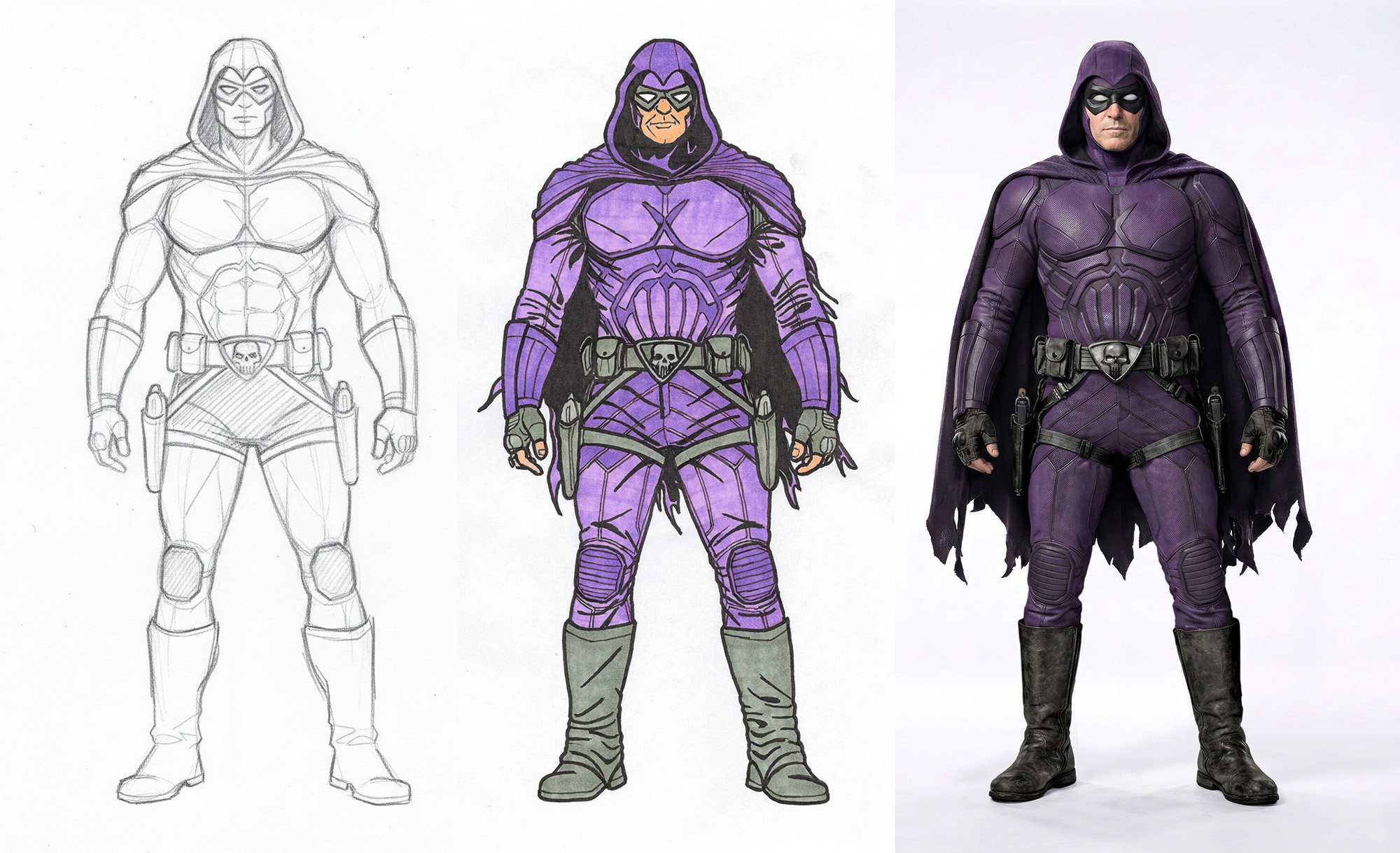
THE PHANTOM/ VISUAL DEVELOPMENT & FRANCHISE MODERNIZATION
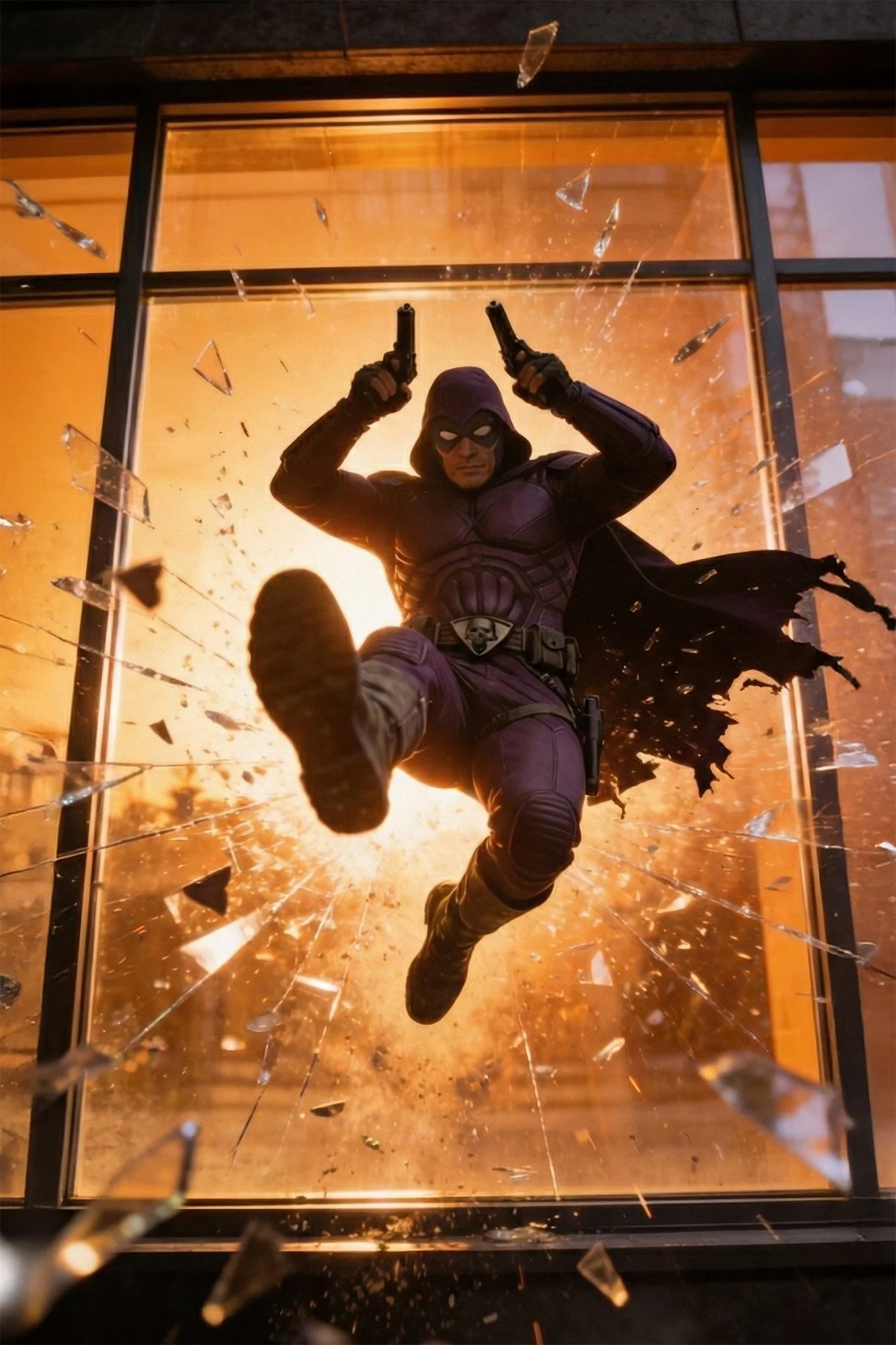
This project focuses on the comprehensive visual development and character reimagining of a global pop-culture icon. The objective was to execute a strategic property modernization of The Phantom, transitioning the character from a 1940s-era "pulp hero" into a grounded, supernatural legend. By blending gothic horror elements with tactical realism, the redesign establishes a high-fidelity franchise identity capable of sustaining modern cinematic storytelling and global retail merchandise.
Project type/ Visual Development, Character Redesign, Property Modernization
Deliverables/ Concept Art, 3D Character Renders, Action Frame Illustration, Packaging Mockups
Date/ February 2026
-
The primary hurdle in a heritage property modernization is rectifying a "dated" aesthetic without alienating a core fanbase. The challenge was to strip away the 1940s-era spandex tropes and replace them with a terrifying, spectral presence. The new character design needed to function across multiple platforms—appearing as a "visceral force" on screen while maintaining the clean, iconic silhouettes required for high-end consumer products and apparel.
-
As the Lead Concept Artist and Art Director, I managed the end-to-end visual development process. My role involved researching 80 years of comic history to identify key legacy elements, executing the new character design through digital illustration, and art directing the cinematic action frames. I also spearheaded the "collectible" proof of concept to demonstrate the design’s commercial viability.
-
The creative strategy focused on "Psychological Warfare" to justify the character's "Ghost Who Walks" moniker. I utilized a multi-generational design bridge to ensure the franchise identity felt both fresh and familiar:
Spectral Silhouette: Replaced the simple cowl with a functional hood and tattered mid-length cape to evoke a grim-reaper aesthetic.
Anatomical Intimidation: Utilized pupil-less white eyes to remove the character’s humanity, heightening his supernatural aura.
Tactical Heritage: Integrated segmented armor plating (inspired by the 1996 film) with practical, low-slung dual holsters (referencing the 1943 serials) to ground the illustration in functional realism.
-
The final visual development suite showcases a "Live-Action Ready" legend. The suit features a deep purple, reinforced tactical texture with subtle diagonal line patterns—a direct illustration homage to the original 1936 striped trunks. To prove the design’s versatility, I produced a high-intensity "Cinematic Action Frame" showing the character in motion, as well as a premium action figure mockup to highlight how the intricate textures translate into physical merchandise.
-
This project successfully re-establishes The Phantom as a viable 21st-century franchise identity. By shifting the focus from "man in a costume" to "spectral force," the redesign creates a visceral, marketable property. The result is a comprehensive property modernization that respects the character's 1936 roots while providing a sophisticated, "merch-ready" blueprint for a modern film franchise.
-
This project reinforced that successful character design is rooted in narrative justification. I learned that "Modernization" isn't just about adding armor; it's about finding the "why" behind the aesthetic. By leaning into the character's mythic reputation as a ghost, I was able to create a visual development system that feels earned, proving that legacy properties can be transformed into contemporary powerhouses through thoughtful, story-driven design.
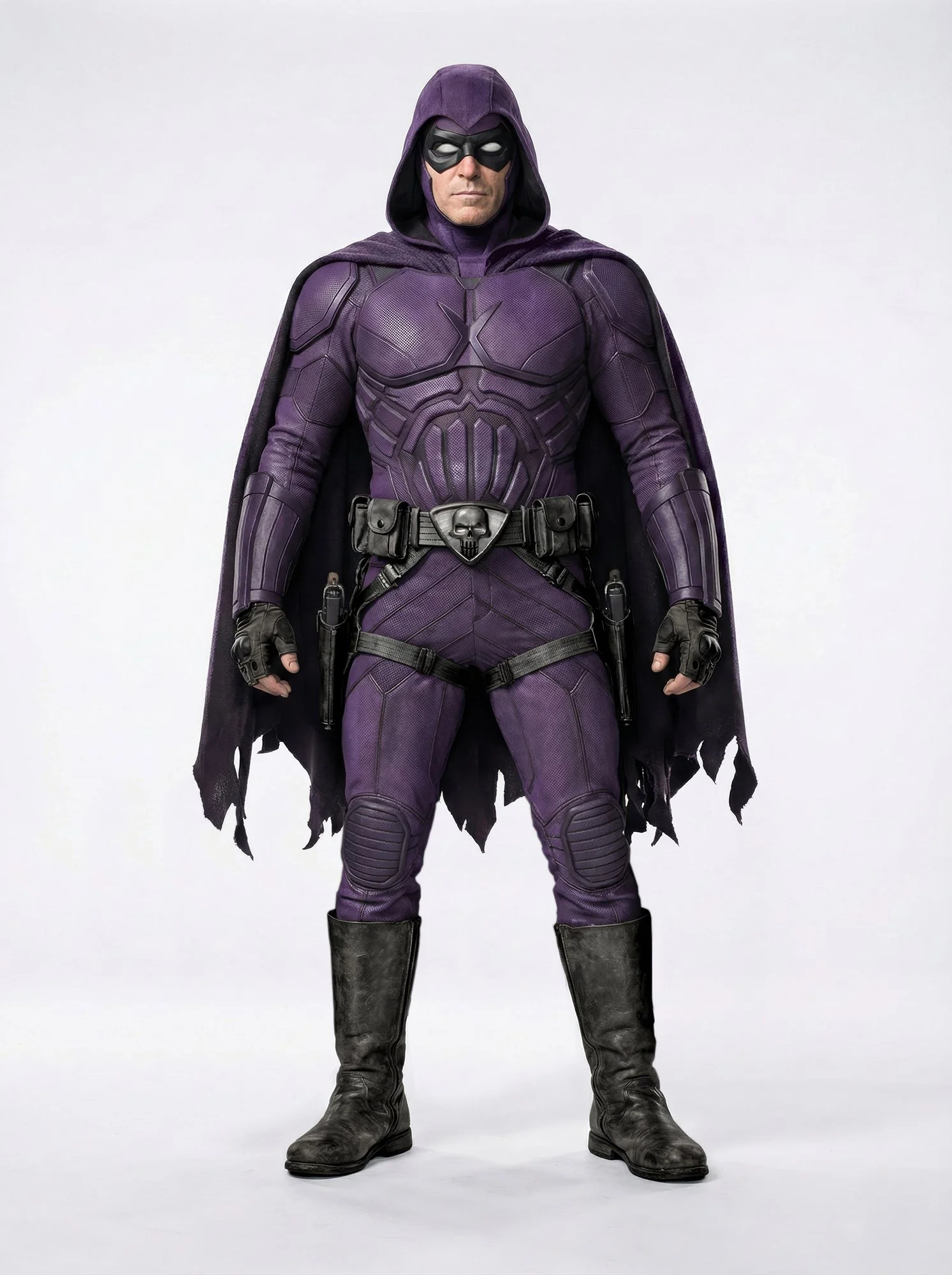
A high-fidelity render showcasing how the redesign's materials—carbon fiber armor and weathered fabric—translate into a photorealistic cinematic environment.
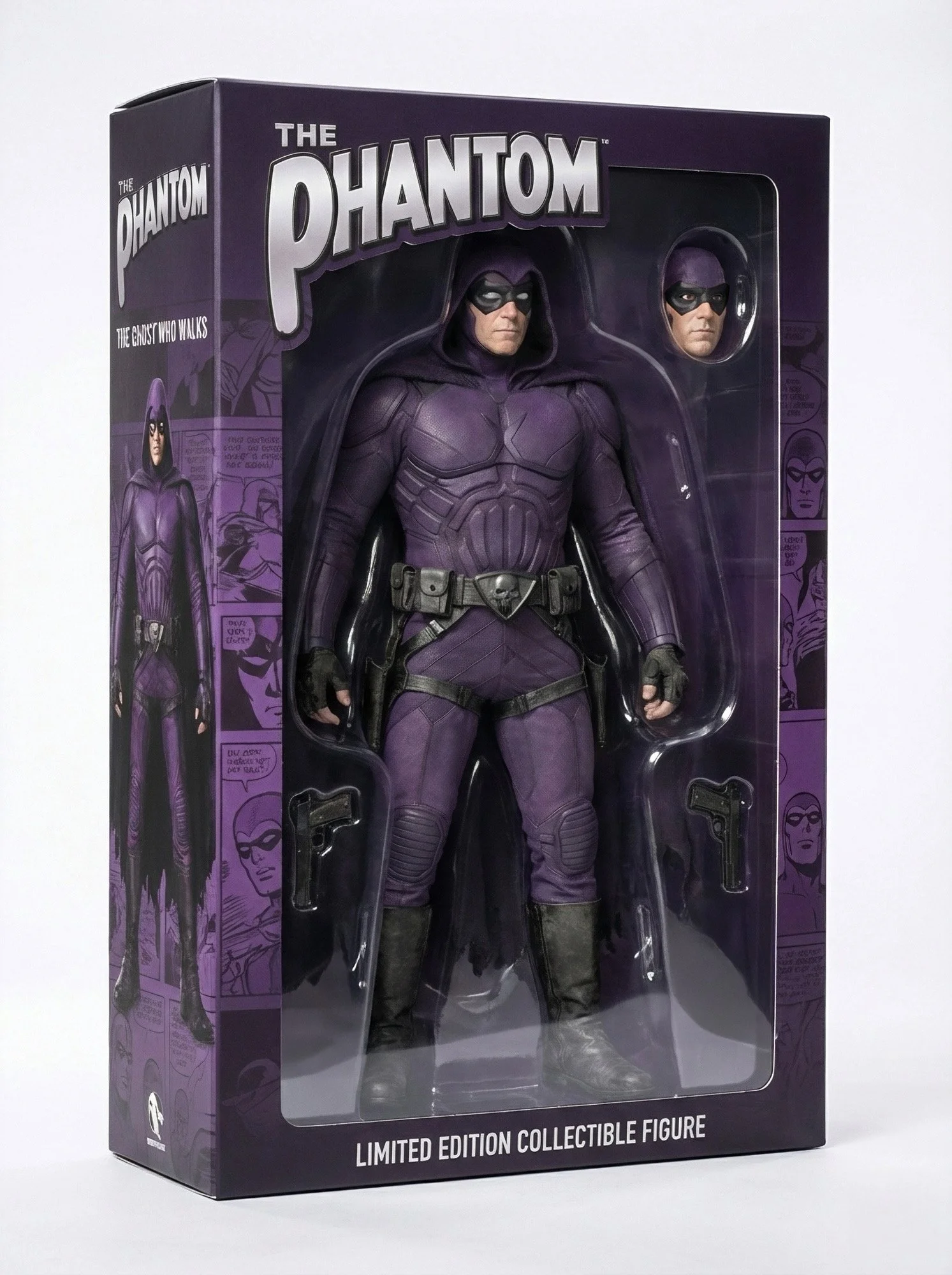
A mockup of a premium action figure and its retail packaging, highlighting the redesign's marketability and translation into 3D consumer products.
A dynamic proof-of-concept frame for a modern show or movie, demonstrating the tactical movement of the tattered cape and the character's signature dual-pistol combat.
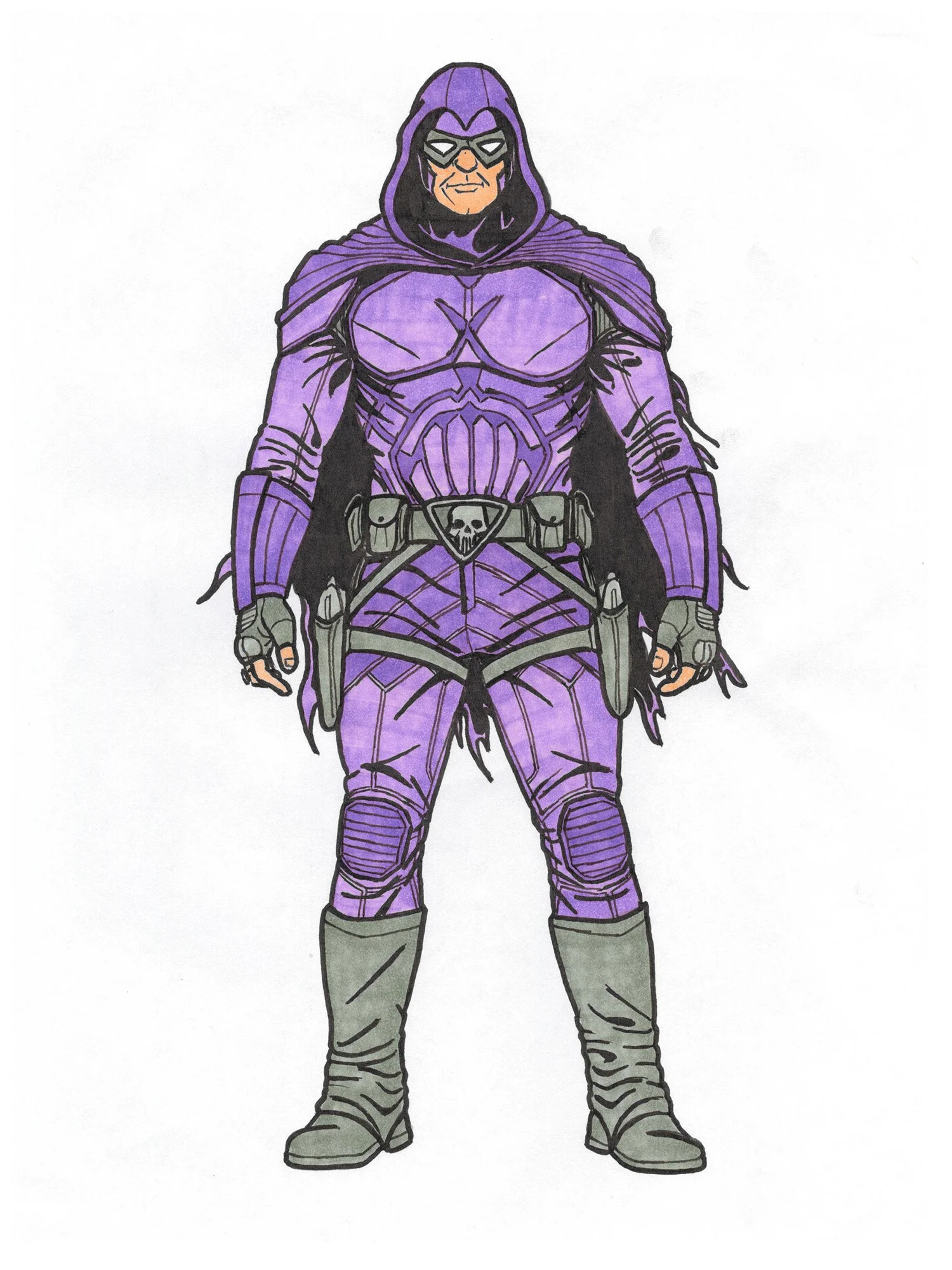
The finalized character design illustration featuring the supernatural "apparition" elements: the hood, tattered mid-length cape, and all-white spectral eyes.
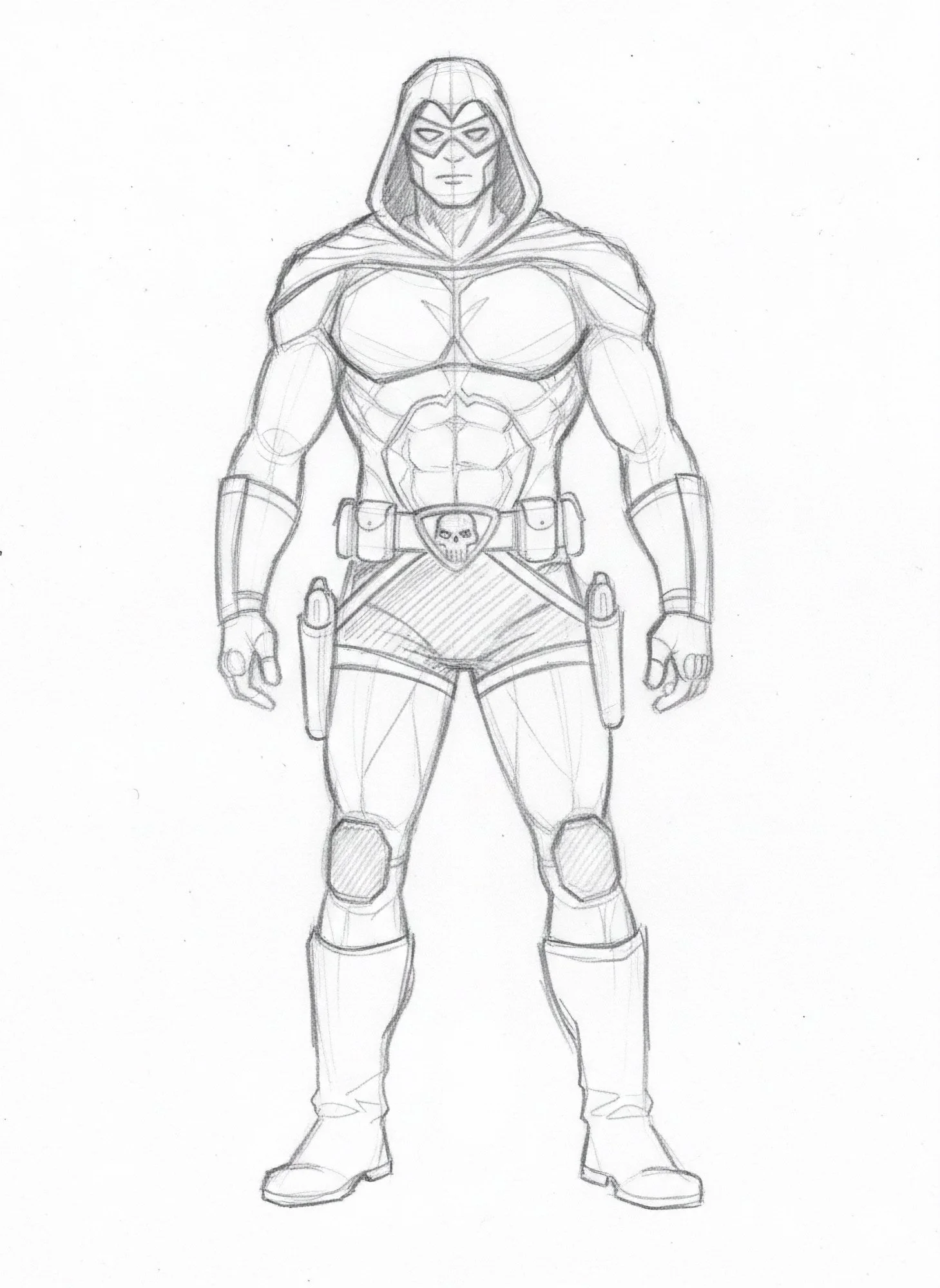
A rough thumbnail sketch used to refine the character's muscular anatomy and establish the basic silhouette of the new hooded tactical suit.
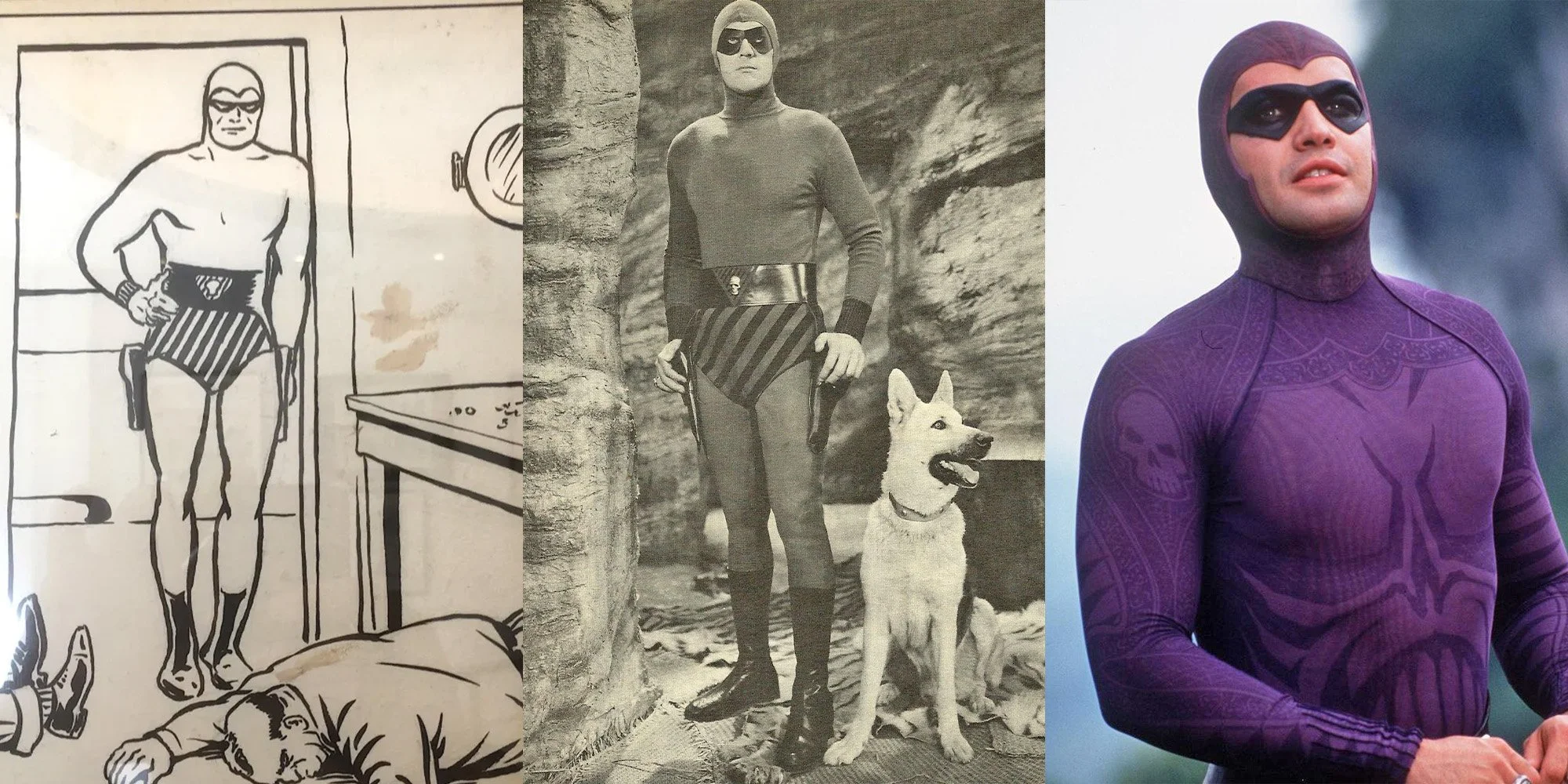
A reference board combining the three major historical iterations of The Phantom to identify key recurring motifs and design opportunities.